

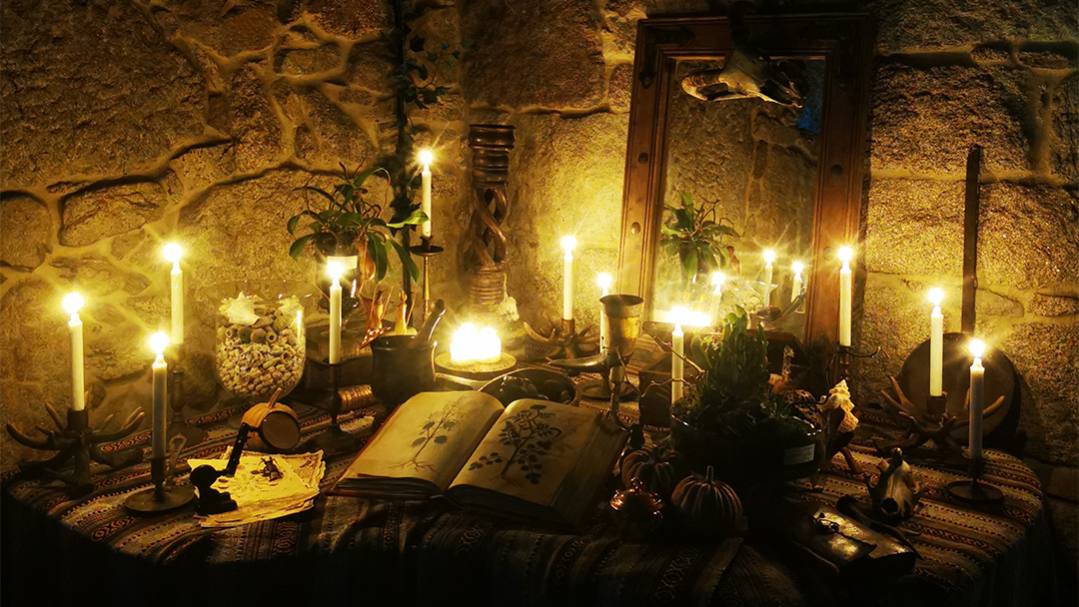
Since ancient times, human beings have felt the need to pause, to mark a place and a moment in the endless flow of life in order to connect with something greater than ourselves. This is how altars are born: symbolic spaces where the visible and the invisible meet, where the everyday is transformed into the sacred.
An altar is not just a table with objects. It is a living metaphor. In it, the material becomes a spiritual language: a stone may represent stability, a candle transformation, a flower the fragility of existence. Each element holds an intention, a memory, a desire.
Across different cultures and eras, altars have served many purposes: honoring ancestors, giving thanks to the earth, asking for protection, or remembering the cycle of life and death. But in every case, they fulfill the same essential mission: gathering what is scattered, giving meaning to the unseen, creating awareness.
Today, in a fast-paced and digital world, returning to the practice of creating altars—physical, symbolic, or even internal—is a way to return to our center. To turn everyday actions into ritual gestures. Because perhaps, as contemporary mystic Marianne Williamson said, “what is placed on the altar is altered.”
Creating an altar, then, is not about looking to the past, but remembering that we are still capable of giving meaning, of transforming a corner of the world—a table, a stone, a cup, a ray of light—into a meeting place with the sacred.
And what if our whole life could be an altar?